


Sarcomatoid mesothelioma is made up of different types of cancer cells. That’s why getting an accurate diagnosis can be tricky. You need an explanation about what is sarcomatoid mesothelioma and how you can get the help you need. (2)
What Is Sarcomatoid Mesothelioma?
Sarcomatoid mesothelioma is a rare subtype of mesothelioma characterized by more aggressive cancer cells than other forms. This kind of cancer can be identified by sarcomatoid cells. Mesothelioma tumors can be made up of epithelial cells, sarcomatoid cells, or a combination of the two. Epithelial cells are shaped like rectangles. Sarcomatoid cells are long and skinny, shaped like spindles. These cells are less likely to stick together. Instead, they break away from the original tumor and spread. (3) (4)
Sarcomatoid mesothelioma is incredibly rare. Only 10% to 15% of mesothelioma cases are sarcomatoid. (5)
Sarcomatoid mesothelioma is highly aggressive. The average survival rate is roughly 5 to 6 months. (6)
Diagnosed with sarcomatoid mesothelioma?
Get a Free Case ReviewWhere Does Sarcomatoid Mesothelioma Develop?
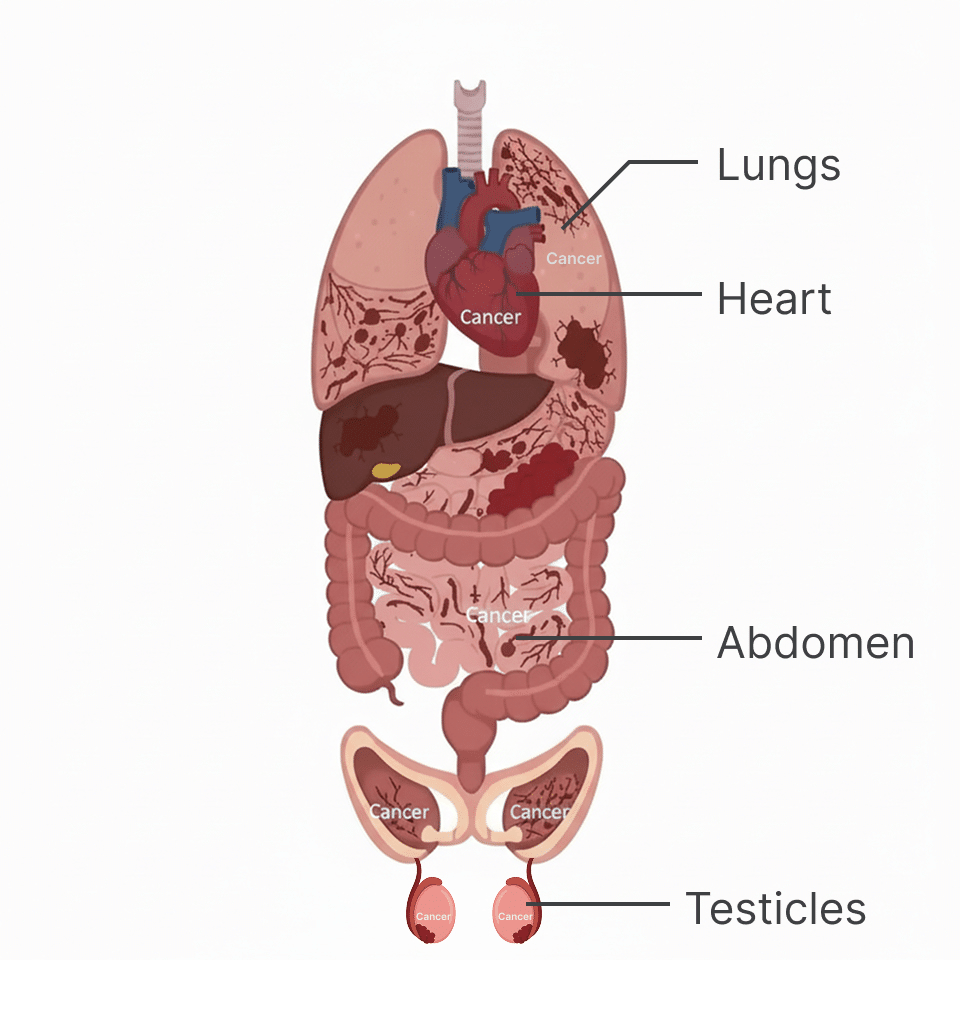
All forms of mesothelioma originate in the mesothelium. The mesothelium is thin tissue that lines and protects many of your internal organs. (7)
Common sites for mesothelioma include the pleura and peritoneum. The pleura lines the lungs and chest cavity. The peritoneum lines the abdominal cavity.
Protective tissue also lines other organs, including the uterus and kidneys. You can also have mesothelioma in the lining of your testicles.
Sarcomatoid mesothelioma may be similar to sarcomatoid carcinoma. Basically, cells that started out as epithelial in nature somehow changed or underwent mutations. These cells became mesenchymal cells. These malignant cells can form in connective tissue anywhere in the body and then travel. (8)
Causes of Sarcomatoid Mesothelioma and Key Risk Factors
Sarcomatoid mesothelioma is caused by exposure to asbestos. This type of cancer is made up of sarcomatous cells and epithelial cells. Sarcomatous refers to connective tissue. Epithelial tissue lines internal organs. (9)
Asbestos is a mineral that occurs naturally in the environment. Back in the 1800s, manufacturers started using asbestos in all kinds of products. People who worked in and around asbestos are most at risk for developing mesothelioma. (10)
Asbestos appears in many products. Industries known for using asbestos include shipbuilding, construction, and automotive specialties of all kinds. Asbestos fibers are incredibly tiny, invisible to the human eye, with tens of thousands of asbestos fibers fitting on the tip of a pencil. They are needle-like. Breathing in these dangerous particles can lead to severe lung damage. However, the damage doesn’t usually show up right away. You can be exposed to asbestos and develop mesothelioma decades later. (11)
Symptoms and Early Warning Signs of Sarcomatoid Mesothelioma
Early warning signs of sarcomatoid mesothelium can be similar to mesothelioma in general. Common symptoms of sarcomatoid mesothelioma include: (12)
- Shortness of breath and constant coughing.
- Coughing up blood.
- Hoarseness.
- Fatigue.
- Weakness.
- Nausea and vomiting.
- Loss of appetite and unintended weight loss, but feeling full.
How Sarcomatoid Mesothelioma Is Diagnosed
To diagnose sarcomatoid mesothelioma, doctors likely begin by asking you about your symptoms and medical history. Because mesothelioma can take a very long time to develop, doctors may ask you about work and other things you did or experienced years ago. They generally also do an initial physical exam.
Doctors use imaging tests and other diagnostic tools, including: (13)


Sometimes doctors use scopes to explore your internal organs. They may perform: (15)
- Upper endoscopy: Doctors look at your throat and upper digestive tract.
- Colonoscopy: Doctors examine your lower digestive tract.
- Laparoscopy: Doctors search for signs of mesothelioma in your abdomen.
Biopsies are another way of diagnosing mesothelioma. Your doctor removes tissue samples to look for cancerous cells. Biopsies are the only definitive way to diagnose mesothelioma. Possible biopsy types include: (16)
- CT-guided core needle biopsy: This method involves CT imaging to help doctors take a tissue sample. (17)
- Incisional/excisional biopsy: Doctors can take part of a suspicious growth or the whole thing. (18)
- Bronchoscopy: Doctors use scope to take a sample of tissue in or around your airways.
- Thoracoscopy: Doctors use a scope to take a sample of tissue from your chest cavity.
- Video-assisted thoracic (VATS) surgery: Doctors use a camera to perform minimally invasive chest surgery. (19)
Treatment Options for Sarcomatoid Mesothelioma
Sarcomatoid mesothelioma treatment often requires a combination of approaches and depends on how advanced the cancer is, where it has spread, and the patient’s overall health. (20)
Some people may live just a few months, but other people may live for years. In fact, some people not only live for years, but die from something else entirely. (21)
Mesothelioma is tricky to treat. This disease can spread and affect blood vessels, nerves, and various types of tissues. You may need to undergo different types of treatment. Sometimes, you need to do them in combination. Potential options for sarcomatoid mesothelioma treatment include: (22)
- Surgery: Especially early on, doctors can remove some or all of the cancer they see.
- Radiation therapy: This targets and kills cancer cells.
- Chemotherapy: This involves using drugs to destroy tumors, or simply slow how fast they grow. Common drugs include pemetrexed, carboplatin, and cisplatin.
- Immunotherapy: This involves using your own immune system to go after and kill cancer cells.
- Palliative care: This type of care isn’t designed to eliminate your cancer. Palliative care is meant to provide comfort and ease your symptoms. For example, sometimes surgery and radiation aren’t used to destroy your cancer. Instead, the surgery is done to eliminate extra fluid from your lungs. The goal is to help you breathe more easily.
Also, researchers sometimes conduct clinical trials. These trials rely on participants willing to try new treatments or approaches. The goal is to find out if these new treatments are safe and effective. Researchers sometimes experiment with new chemotherapy and immunotherapy drugs. Other possible treatments include gene therapy and photodynamic therapy.
Legal Rights for Those Diagnosed with Sarcomatoid Mesothelioma
Sarcomatoid mesothelioma is caused by asbestos exposure, often due to unsafe workplace conditions. Patients diagnosed with this rare form of mesothelioma may have legal options to pursue compensation for medical care, lost income, and family support.
If you or a loved one was exposed to asbestos and developed any form of mesothelioma, you and your family have a legal right to file a lawsuit against the companies responsible. The companies that put your health at risk knew better and should have done better.
If you or a loved one has been diagnosed with sarcomatoid mesothelioma, time matters. Understanding your legal options can help protect your family and hold responsible companies accountable.
Get a Free Case ReviewLiving with Sarcomatoid Mesothelioma: Support and Care
If you were diagnosed with sarcomatoid mesothelioma, you don’t have to go through it alone. Many organizations offer care support. Some of these include:
- American Cancer Society: They are available 24/7. They can help from the moment you are diagnosed throughout your treatment. They also offer free lodging and transportation. Whether you’re looking for emotional support or need help in getting the daily care you need, they offer a variety of services and programs. There is a website section for caregivers. (23) (24)
- Cancer Care: They offer counseling, support groups, and financial assistance. They also provide educational workshops, community programs, and help in finding the information you need for specific types of cancer. (25)
- Gilda’s Club. Cancer Support Community: They provide support not only for people diagnosed with cancer, but also their family members and friends. All of their programs are free. You can search their website for resources near where you live. (26)
- Mesothelioma Applied Research Foundation: They can help you find medical specialists and treatments specifically for people diagnosed with mesothelioma. They can also steer you toward possible clinical trials. In addition, they may be able to help you get financial aid. (27)
- American Lung Association: They provide a website about treating and managing mesothelioma and a hotline to answer your questions. You can find out about specific types of treatment for mesothelioma. They also offer suggestions for living with this diagnosis. In addition, you can talk to someone trained in respiratory illnesses. (28)
Counseling clinics, hospitals, and care centers across the country also offer support for the patients they’re treating. You may find that your cancer clinic or hospital offers grief support services, as well. Examples include:
- Dana-Farber Brigham Cancer Institute in Massachusetts.
- Memorial Sloan Kettering Cancer Center in New York City.
- Hospitals of the University of Pennsylvania-Penn Presbyterian in Philadelphia.
- Johns Hopkins in Baltimore, Maryland.
- GW Cancer Center in Washington, D.C.
- Duke Cancer Institute in Durham, North Carolina.
- Moffitt Cancer Center in Tampa, Florida.
- Cleveland Clinic in Ohio.
- University of Chicago Medical Center in Illinois.
- Mayo Clinic in Rochester, Minnesota.
- University of Texas MD Anderson Cancer Center.
- University of California, Los Angeles.
Contact Weitz & Luxenberg for Legal Support
Sarcomatoid mesothelioma is an unusually rare kind of mesothelioma made up of different types of cancer cells. And, it’s tricky to diagnose. The more advanced the disease is, the worse the prognosis. The earlier you are diagnosed, the earlier your treatment can begin.
Like all forms of mesothelioma, sarcomatoid mesothelioma is caused by asbestos exposure. The companies that make and distribute products with asbestos have known about the dangers for decades. But they didn’t protect their employees or the public. They put your life at risk. This is negligent. They should be held to account.
Weitz & Luxenberg can help. A little over 40 years ago, we started our firm specifically to help people diagnosed with mesothelioma. Companies that knowingly exposed people to asbestos are some of the worst offenders out there. So, we went after them with a vengeance.
And our efforts have paid off, literally. We have achieved more than $13 billion dollars in settlements and wins on behalf of our clients who were exposed to asbestos.
You don’t have to go it alone. We urge you to reach out to us for a case evaluation at no charge.
We can help you consider your legal options. To find out more, you can call us at (917) LAWYERS or fill in the form on this page.