


If you have been diagnosed with epithelioid mesothelioma, you need help. This is a good starting point for learning about what is epithelioid mesothelioma and finding the resources.
What Is Epithelioid Mesothelioma?
Epithelioid mesothelioma is a type of mesothelioma defined by epithelioid cells, which tend to grow and spread more slowly than other mesothelioma cell types. When you look at the cells involved in mesothelioma, there are three main types: epithelioid, sarcomatoid, and mixed or biphasic. Epithelioid is the most common. (2)
Each year, roughly 2,500 people are diagnosed with malignant pleural mesothelioma. Of these, roughly 50% are diagnosed with epithelial mesothelioma. (3)
Epithelioid cells look a bit like cubes or columns. These flattened cells tend to stick together and form tubular webs or nests. On the other hand, sarcomatoid cells are shaped more like spindles. Spindles are longer and skinnier, with tapered ends. (4)
Were you diagnosed with epithelioid mesothelioma after asbestos exposure? You don’t have to face this alone.
Get a Free Case ReviewWhere Is Epithelioid Mesothelioma Located?
The word “epithelioid” tells doctors about the type of cancerous cells that make up your mesothelioma. That word doesn’t specify a certain location. The word “mesothelioma” is what tells doctors what type of cancer you have and where it is located. (5)
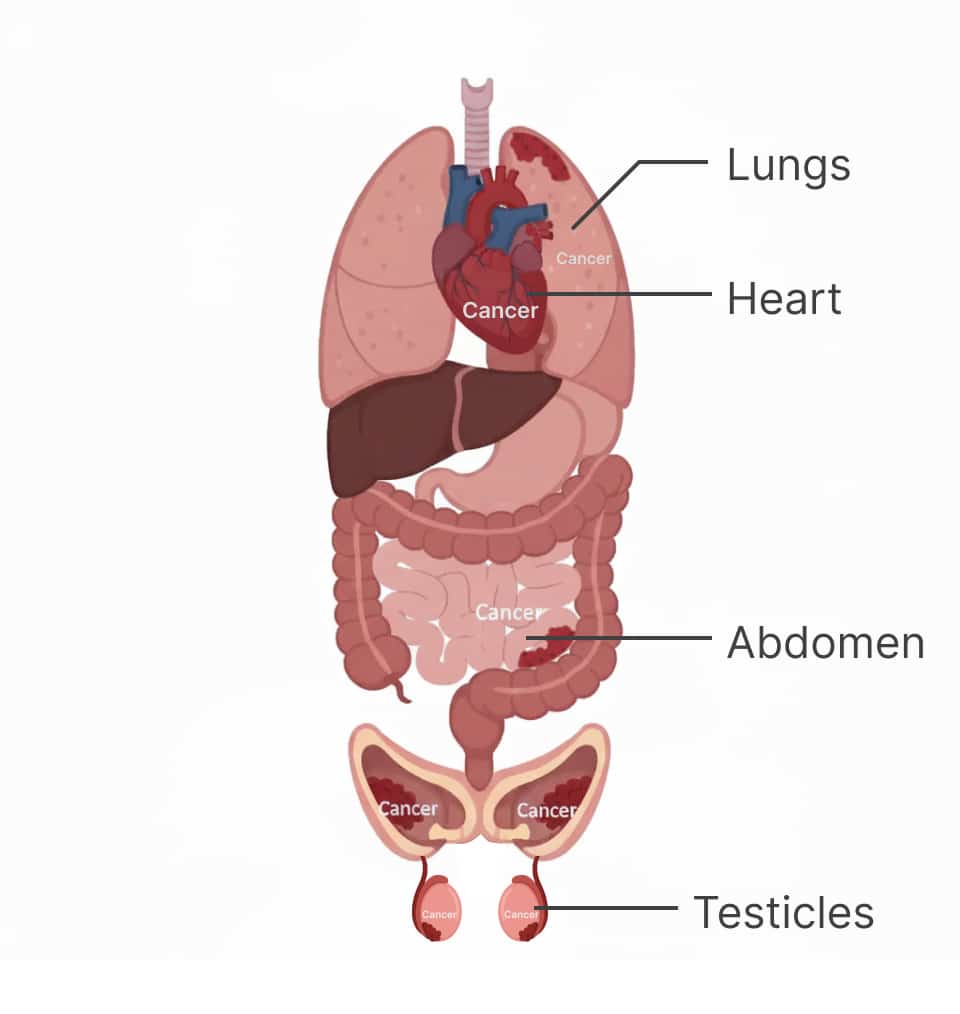
The most common place for mesothelioma to form is in the protective lining that surrounds your lungs. Mesothelioma can also form in the protective lining around your abdomen, heart, or testicles. (6)
The lining around your lungs is called the pleura. The lining around your heart is called the pericardium. The lining around your abdominal organs is called the peritoneum. (7)
Why Asbestos Exposure Is the Leading Cause of Epithelioid Mesothelioma
Asbestos exposure is the cause of all types of mesothelioma. When doctors take a lung biopsy of someone with mesothelioma, they can identify actual asbestos fibers in the lung tissue. (8) This is true whether you have direct primary exposure to asbestos where you worked with asbestos-containing products or secondary exposure involving others working with asbestos-containing products around you.
Asbestos is a rock mineral. It exists in our environment naturally in bunches of fibers in geologic rock formations. Asbestos is also fire and heat resistant. Manufacturers found, after mining and refining, that they could use asbestos fibers in all kinds of products. (9)
Asbestos is particularly dangerous to us when we breathe it in. The fibers enter our lungs and can stay there for decades. People who work in certain industries are more likely to be exposed to these fibers, often for hours at a time and over many years. The more you breathe asbestos laden dust in, the more asbestos fibers accumulate and damage your lung tissue. These fibers can lead to scarring and inflammation. (10) (11)
Common Symptoms and Early Warning Signs of Epithelioid Mesothelioma
Your mesothelioma symptoms depend on where your cancer is. The two main areas are near your lungs and your abdomen. (12)
Here are some typical common signs and symptoms of pleural mesothelioma:
- Chest pain.
- Shortness of breath.
- Painful coughing.
- Lumps under the skin on your chest.
- Unintended weight loss.
- Tiredness.
Here are some typical common signs and symptoms of peritoneal mesothelioma:
- Stomach pain and swelling.
- Nausea.
- Unintended weight loss.
- Tiredness.
How Doctors Confirm an Epithelioid Mesothelioma Diagnosis
To confirm a diagnosis of epithelioid mesothelioma, you start by seeing your primary doctor. Your doctor likely asks about your symptoms and conducts a physical exam. If your symptoms are affecting your lungs, you can expect an X-ray. (13)
Your primary doctor may suspect mesothelioma. However, the doctor may refer you on to a specialist, who can provide a more comprehensive exam.
Because mesothelioma has a long latency period, your doctor needs to consider your medical history dating back decades. (14)
Possible tests for epithelioid mesothelioma include:


What Are the Treatment Options for Epithelioid Mesothelioma
Treating epithelioid mesothelioma partly depends on how early it is caught. Epithelioid mesothelioma is generally not as fast moving when compared to other cellular types of mesothelioma. The median survival time of epithelioid mesothelioma is around 18 months. And new approaches for treating the disease are always being explored. Some common treatments include: (20) (21)
- Surgery: Doctors consider several surgical approaches. They may aim to completely remove the visible tumor. Another possibility is a pleurectomy and decortication involving removal of the tumor and surrounding tissue, but not a lung. In limited situations, doctors may consider performing an extrapleural pneumonectomy that involves removing the lung, the parietal pleura (lining of the chest cavity), diaphragm, and pericardium (membrane enclosing the heart).
- Chemotherapy: Doctors use drugs to fight the cancer. Examples include pemetrexed, cisplatin, carboplatin, and bevacizumab.
- Immunotherapy: Doctors use a combination of immune checkpoint inhibitors. These drugs help your body’s immune system fight the cancer. Examples include nivolumab and ipilimumab.
- Radiation therapy: Doctors use radiation to target and destroy cancer cells. Sometimes doctors use radiation simply to relieve pain and help keep you comfortable.
- Up-and-coming therapies: Researchers are always looking for new and better ways to stop cancer from growing. They are studying the role of genes, cell mutations, and abnormalities at the cellular level. These new approaches will hopefully become available treatments at some point in the near future.
- Supportive and palliative care: This type of care focuses on helping patients feel more comfortable physically and emotionally. Drugs are often used. Surgical procedures might also be part of this care.
Your Legal Rights After an Epithelioid Mesothelioma Diagnosis
When you are diagnosed with mesothelioma, the culprit is asbestos. We’ve known this for decades. Companies have known this, too. But instead of protecting their workers and the public, they put profits first.
Anyone diagnosed with any form of mesothelioma, including epithelioid mesothelioma, has a legal right to sue. Companies that put people’s lives in danger need to be held responsible for their actions.
An epithelioid mesothelioma diagnosis often raises questions about treatment, prognosis, and accountability. You deserve clear answers and experienced guidance.
Get a Free Case ReviewNavigating Life with Epithelioid Mesothelioma
You may feel alone in trying to navigate life with a diagnosis of epithelioid mesothelioma. But you are not.
Many resources are available, including the:
- American Cancer Society (ACS): Their aim is to help people living with a cancer diagnosis. They were founded back in 1913. Since then, they have been fighting cancer and doing all they can to help people manage their diagnosis. You can reach them 24/7. They offer emotional support, as well as free lodging and transportation. (22) (23)
- ACS Caregivers and Family: This section is designed to help family and friends of people living with a cancer diagnosis. Being a caregiver is its own challenge. (24)
- Gilda’s Club Cancer Support Community: They can help you find a location near you that offers free support groups and educational workshops. You can also find cancer centers near you, information about resources in your particular location, and community support all over the country. (25)
- Mesothelioma Applied Research Foundation: They provide funding for research and also treatment support. They can help you find medical specialists. You can also speak with one of their staff nurses. They can tell you about financial aid, grief support groups, and educational programs. (26)
- American Lung Association: You can find out about treatment options for mesothelioma. They also offer a helpline and community support. (27)
How Weitz & Luxenberg Can Help You Seek Justice
Epithelioid mesothelioma may have a better prognosis than other mesothelioma cell types, but it is still mesothelioma. Mesothelioma is a rare and highly aggressive cancer that moves quickly. If you were diagnosed with this disease, you were exposed to asbestos at some point. And one or more companies were responsible.
We have known for decades asbestos can cause cancer. But there are companies that would rather cut corners and not take the necessary safety precautions. For them, it’s about money.
The lawyers at Weitz & Luxenberg believe that is wrong. That’s why we started our firm back in the mid-1980s. To hold irresponsible companies accountable, particularly those that knowingly exposed people to asbestos.
Since then, we have secured more than $13 billion on behalf of our clients who developed mesothelioma, including epithelioid mesothelioma. We can help you.
We always offer a case evaluation at no cost to you. And if we don’t win your case, you don’t owe us anything. To learn more, contact us now at (917) LAWYERS or fill out the form on this page.