

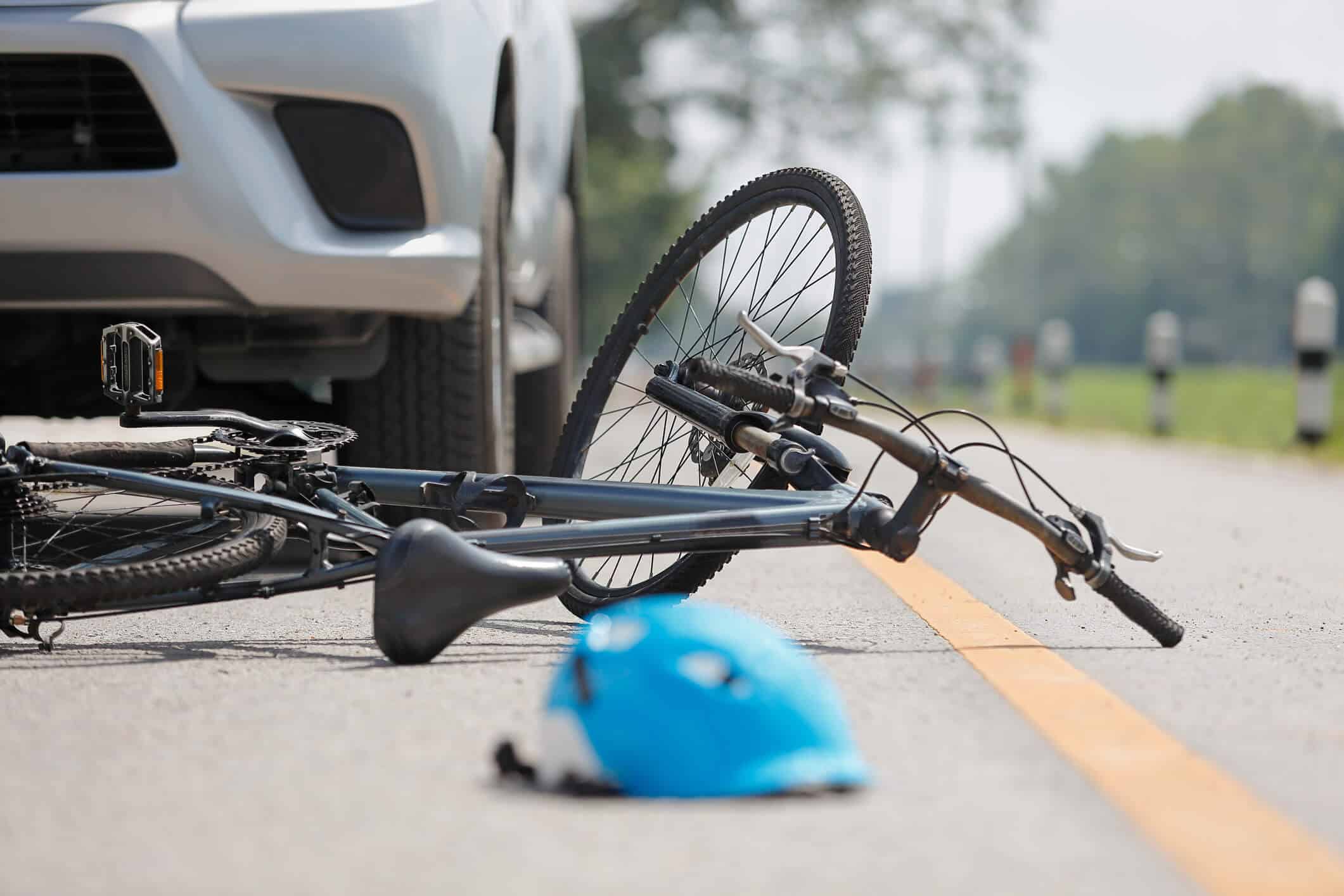
Bicycle Accident Statistics
In 2023, pedalcyclists accidents killed 1,166 people nationwide. This is up 4% over 2022 fatalities. In 2023, a whopping 81% of pedalcyclist fatalities were in urban areas and 28% occurred at intersections. (1)
“Pedalcyclists who died in single-vehicle traffic crashes involving passenger vehicles (passenger cars and light trucks including SUVs, pickups, and vans) were more likely to be hit by the front of these vehicles as compared to crashes involving large trucks and buses,” says the National Highway Traffic Safety Administration (NHTSA). (2)
Other bicycle fatality and injury facts reported by NHTSA: (3)
- Alcohol involvement accounted for 34% of all fatal crashes.
- Injuries to pedalcyclists increased 8%, to 49,989.
- Rates of fatalities (7%) and injuries (5%) were higher for males than females.
- Males suffered 87% of fatalities and 83% of injuries.
- Fatalities for pedalcyclists in traffic crashes had an average age of 48.
- Traffic fatalities in New York City (NYC) totaled 204; of these, 22 (10.8%) were pedalcyclists.
Serious bicycle accidents can result in severe injuries or death. Severe injuries may require hospitalization, expensive medical treatments, and lengthy recovery times.
“That equates to an eye-popping $12.2 billion in societal costs from bicyclist deaths in 2023 (based on cost estimates from 2019, pre-Covid era inflation),” says The League of American Bicyclists. Societal costs include “medical expenses, lost wages and benefits, lost household work, lost quality of life, legal expenses, and insurance administration.” (4)
New York Bicycle Crash Facts
The NYC Department of Transportation reports 21 fatalities in the first half of 2025 for traditional bicycles and motorized two-wheelers. (5)
A breakdown of citywide traffic fatality totals involving bikes in 2025 includes: (6)
- Total pedestrian deaths — 51.
- Traditional bicyclist killed — 1.
- E-bike deaths — 6.
- Standup scooter death — 1.
- Moped deaths — 6.
According to analysis based on the NYPD Motor Vehicle Collisions Dataset for March 13, 2025 to 2026, citywide bicycle crash injuries and fatalities include: (7)
- Total number of cyclist incidents — 4,033.
- Total cyclist injuries — 4,086.
- Total cyclist fatalities — 13.
With incidents involving bicycles, it is important to look at what causes these accidents.

Common Causes of Bicycle Accidents
There are numerous causes of bicycle accidents and the outcome may be very serious. Here are some of the most common causes:
Driver inattention and distraction — Drivers are more distracted today because of texting and cell phone use. “Distracted drivers are less aware of their surroundings and can easily overlook cyclists.” (8)
Poor road conditions — “Uneven pavement, potholes, gravel, and other road hazards can cause a cyclist to lose control, leading to falls or crashes.” Cycling at higher speeds worsens these problems. (9)
Disobeying traffic laws — When cyclists run red lights or fail to yield at stop signs, they increase chances for accidents. (10)
Protective gear — Failure to wear any protective gear or to wear inadequate protective gear can increase risks for injuries. For example, a helmet is one of the best ways of protecting your head in a crash. (11)
Riding at night — Nighttime riding is more dangerous due to visibility concerns. Riders not wearing reflective gear may not be seen by drivers, especially in bad weather or conditions which already limit visibility. (12)
If you or anyone you know has suffered an injury in a bicycle accident, contact us for a free case evaluation.
Get a Free Case ReviewOther possible causes of bicycle accidents:
- Drunk drivers.
- Drivers not sharing the road.
- Improper turns.
- Defective bicycles.
Regardless of the causes of an accident, bicyclists can suffer a number of injuries. Bicyclists are out in the open with nothing surrounding them to provide protection.
Bike Accident Injuries
The most common injuries sustained in bicycle accidents include soft tissue and musculoskeletal trauma. But the most disabling or fatal harm often results from head injuries. (13)
“Crash severity often depends on speed, helmet use, and whether a motor vehicle is involved, making awareness a key part of rider safety.” (14)
Researchers found, “an increase in injuries associated with higher impact forces and the potential for more severe morbidity and mortality, such as internal organ injuries… The extremities are the most commonly injured body parts (upper and lower arm, elbow, wrist, hand, fingers, upper and lower leg, knee, ankle, foot, and toe.” (15)
Traumatic Injuries
Traumatic injuries affecting the head, face, eye, muscles, skeleton, chest, abdomen, organs, spine, and neck may include: (16) (17)
- Skull fracture.
- Traumatic brain Injuries.
- Cervical spine trauma.
- Thoracic or lumbar fractures.
- Neck strain and whiplash.
- Chest, abdominal, and organ damage.
- Internal bleeding.
- Facial bone fractures.
- Concussion.
- Contusions.
- Dental fractures.
- Eye socket and orbital damage.
- Abrasions and deep scrapes.
- Cuts.
- Muscles bruising and swelling.
- Wrist, hand, forearm, and clavicle fractures.
- Shoulder dislocations.
- Ligament damage.
- Tibia and fibula fractures.
- Ankle and foot trauma.
A quick glance at the demographics of bicycle accidents reveals who is most likely to suffer these injuries.
Demographics of Bicycle Accidents
Among the demographics for bicycle accidents the Centers for Disease Control and Prevention (CDC) notes are: (18)
- The highest death rates are among adults 55-69.
- Most of the roughly 120,000 injuries treated in emergency departments are for adolescents (10-14 years).
- Male fatality rates are 7 times higher than females.
- Male injury rates are 4 times higher than females.
- More than one-third of bicyclist deaths are alcohol related.
Despite these demographics, when a bicycle accident occurs, a determination of liability must be made.

Liability
Liability (legal responsibility) is an important consideration in any accident. Determining liability identifies who is accountable and should pay damages (money awarded) in a lawsuit.
The majority of bicycle accidents involve drivers and cyclists. In these cases, the drivers of a motor vehicle or their insurance company can be held accountable for causing an accident.
Governments are responsible for maintaining streets and roadways. Tight budgets and limited funding can delay needed maintenance and repairs. When bicycle accidents happen because of poor road conditions, government agencies can be held liable.
Bicyclists need to understand the basic rules of liability and must follow traffic laws. If they do not, they can be held partially accountable for an accident.
Other cyclists, and even pedestrians, can be held liable. They are responsible if they violate a rider’s right-of-way, leading to an accident.
Were you or a loved one injured in a bicycle accident? You may be eligible for compensation.
Get a Free Case ReviewDefective Bicycles
If you suffered an injury from riding a defective bike, you may be able to sue to recover damages. In these cases, something is wrong with the bike itself, and the defect caused you to get hurt while you were using it.
Brakes can fail, wheels can fall off, or other parts of bicycles can function incorrectly. These can cause a bike to crash, or throw you off or even into traffic.
Manufacturers can be held liable for poor bicycle design or inferior construction. They are responsible for creating safe, usable products that function correctly.
If you rented the bicycle, the rental company may have done something wrong. The company might not have maintained the bike properly. Or it may have rented you one it knew was damaged or malfunctioning.
Your attorney can help identify who may be liable in your bicycle accident legal case.
What To Do If You Are in a Bicycle Accident
If you have been in a bicycle accident, these are steps you should take to protect your rights:
- Seek medical attention for any injuries.
- Wait for the police to arrive, if possible.
- Exchange contact information with the other party: do not admit fault or apologize, do not negotiate.
- Report your version of events to the police.
- Record the officer’s name, badge number, and the report number.
- Document what happened: take pictures of the scene with your cell phone, including the damage done and injuries sustained.
- Collect any other evidence.
- Write down when, where, and how the accident occurred.
- Hire an experienced attorney: do not talk to the other party, their lawyers, or their insurance company.
How W&L Can Help
Weitz & Luxenberg attorneys have successfully represented thousands of clients over the years. We handle all types of personal injury cases, securing verdicts and settlements in the millions of dollars.
Here are a couple of our successes:
- W&L won a $20.5+ million verdict for a man confined to a wheelchair after a hit-and-run accident.
- W&L negotiated a $1.4 million settlement for injuries suffered by a woman hit by an ambulance and has lasting health issues.
Updated March 25, 2026