

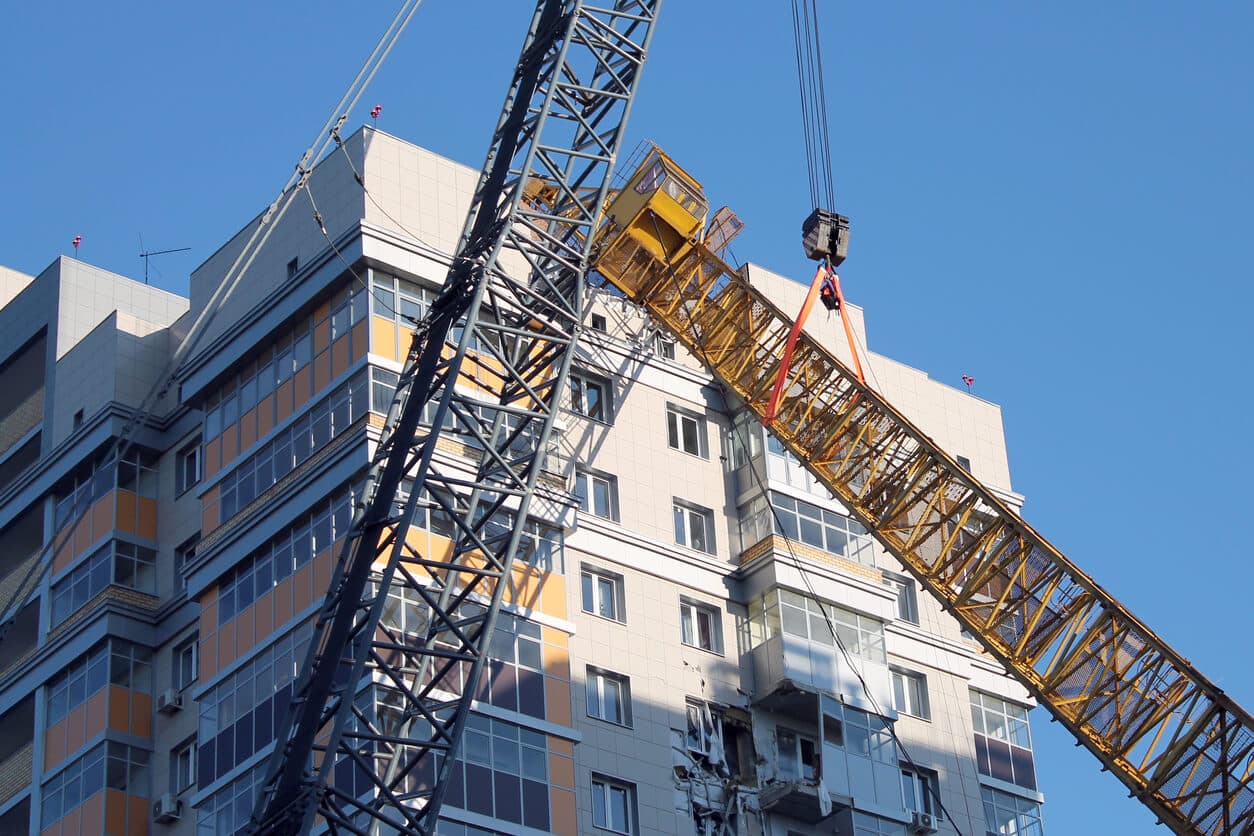
Deaths Due to Cranes
The grim reality is, according to the U.S. Bureau of Labor Statistics (BLS), in 2022 there were 85 fatalities related to construction equipment operation. (1) This construction equipment includes cranes, that can be very dangerous.
“The crane industry can be dangerous and more must be done to protect workers in this industry,” says a senior director at the National Safety Council. (2)
A private industry analysis of BLS data indicated a total of 319 crane incidents. These incidents resulted in 180 injuries and 161 fatalities. They involved 1,013 Occupational Safety and Health Administration (OSHA) violations. (3)
Overhead cranes incidents often result in severe injuries. “From Jan. 1, 2015 – Sept. 30, 2020 there were 411 incidents reported involving industrial overhead cranes,” says the analysis. (4)
Areas of the body injured include the: (5)
- Head — 3%.
- Hands and fingers — 46%.
- Legs — 17%.
- Foot — 12%.
- Chest — 8%.
- Arms — 6%.
The analysis also reported 72% of incidents occurred “during routine job activities.” Workers injured included: (6)
- Crane operators — 60%.
- Maintenance employee — 14%.
- Rigger or signal person — 8%.
- Production employee — 6%.
- Millwright — 3%.
New York Crane Mishaps
One of New York City’s fatal crane mishaps occurred when a crane collapse killed one person and injured three others — two seriously. (7) But there have been plenty of construction-related accidents since then.
The New York City Department of Buildings warns, “A single incident may have multiple injuries and/or fatalities.” Department data for 2023 showed a total of 649 construction related injuries and fatalities — including crane incidents — across all 5 boroughs, with 692 injuries and 7 deaths. Manhattan accounted for 236 of those accidents, with 264 injuries and 3 fatalities. (8)
Construction related incidents by type in early 2024 include: (9)
- Mechanical Construction Equipment — 11.6%.
- Material Failure (Fell) — 11.6%.
- Worker Fell — 65.1%.
If you were injured in a crane accident, a lawsuit can get you the compensation you deserve.
Get a Free Case ReviewTypes of Crane Accidents
There are a number of crane accident types that can occur. Types of crane incidents resulting in fatalities include:
- Boom failure or collapse: This happens when “The boom is overextended, causing failure under heavy loads” or putting “Excess pressure on the hydraulic, mechanical, and structural components can cause the crane to collapse.” (10)
- Contact with overhead power lines: This is caused by “Operating too closely to power lines” or “Failure to assess the work area and remove obstructions or eliminate hazards.” (11) The BLS reports 213 fatal overall contact incidents in 2024. (12)
- Dropped load: This occurs when “Exceeding the crane’s load capacity” or when “Securing the load incorrectly” or if “Having an unbalanced load.” (13)
- Falls from crane: When “A worker falls from the crane’s cab level to a lower level.” (14) BLS says falls, slips, and trips accounted for 370 out of the 1,032 construction and extraction fatalities in 2024. (15)
- Tipping over: This can be due to extreme winds, an uneven ground layer, exceeded load capacity, or incorrectly used outriggers. (16)
- Structural failure: This is triggered by “Putting excess pressure on the mechanical component” or “Exceeding the load capacity” of the crane. (17)
One of the reasons crane accidents can be so hazardous is because of where these cranes operate. They are used in the middle of the city, around existing buildings, putting car and pedestrian traffic at risk.
Accident Prone Cranes
Some cranes are more prone to accidents than others. “Four main types of cranes have been associated with crane-related fatalities,” says the Electronic Library of Construction Occupational Safety & Health. (18)
Cranes identified as likely to have accidents were: (19)
- Floating or barge cranes.
- Mobile or truck cranes.
- Overhead or gantry cranes.
- Tower cranes.
Causes of Crane Accidents
No matter the type of crane, the cause of an accident is a critical piece of information in a lawsuit.
The causes of crane accidents are numerous and varied. In general, causes include: (20)
- Improper use of cranes: An absence of job safety site plans can lead to improper use of cranes. For example, “crane loads should not be allowed to pass over street traffic.” (21)
- Inexperienced/incapable operator: A lack of worker or supervisor training may be to blame for an accident. (22)
- Equipment malfunction/improper assembly: “Inadequate inspections have been implicated in work-related crane deaths… only trained workers should assemble, modify or disassemble cranes.” (23)
- Contact with electrical lines: “Over half of all electrocutions (53%) were associated with the crane boom, cable or load/load line contacting an overhead power line. The rest involved contact of an overhead power line with unspecified parts of the crane.” (24)
Legal Options
Crane accidents can result in severe injuries and fatalities to both workers and bystanders. (25) Mounting bills, lost wages, and lengthy recovery times are important factors to take into consideration when exploring your legal options.
Crane accident cases typically fall under negligence. The legal concept of negligence means a defendant (party being sued) has failed to behave with the “level of care that a reasonable person” would have exercised in a similar situation. (26)
When dealing with a crane accident, there may be multiple defendants responsible for your injury. It depends on whether a person or company was negligent.
Who Was Negligent?
For example, you are walking past a high rise building in the city. A crane is being used on top of the building. No signs are posted on the sidewalk to alert you of the potential hazard. Suddenly, the crane collapses and crashes down on you. You are seriously injured.
In this scenario, the building owners are negligent since they failed to post warning signs, something the owners are required to do. The building owners can be held accountable.
Also, upon investigation of the accident, the construction company records show the crane was not properly maintained. Regular inspections were not conducted. The construction company can be held responsible for your injuries.
Additionally, the crane operator may have failed to operate the collapsed crane properly. The operator could also be held accountable for your injuries.
Finally, the crane collapsed because of a defective boom. The manufacturer of the crane could be held accountable for the improper construction of the boom.
Consulting with an attorney is one of the best ways to advance your case and ensure an optimal outcome.
Were you or a loved one injured in a crane accident? You may be eligible for compensation.
(917) LAWYERSHow W&L Can Help
Weitz & Luxenberg has litigated numerous construction accident and personal injury cases. With nearly 40 years in practice, our firm has successfully represented our clients’ interests.
Here are a few of our winning cases:
- $4 million for a young union painter who fell 20 feet from a scaffold he stood on and suffered serious injuries.
- $1.25 million for a laborer who suffered severe neck and back injuries when a partially constructed cinder block wall fell over due to wind.
- $950,000 for a construction worker suffered a rotator cuff tear requiring surgery when he was knocked off a lift truck bumped by a passing motor vehicle passing.
Updated June 2026