

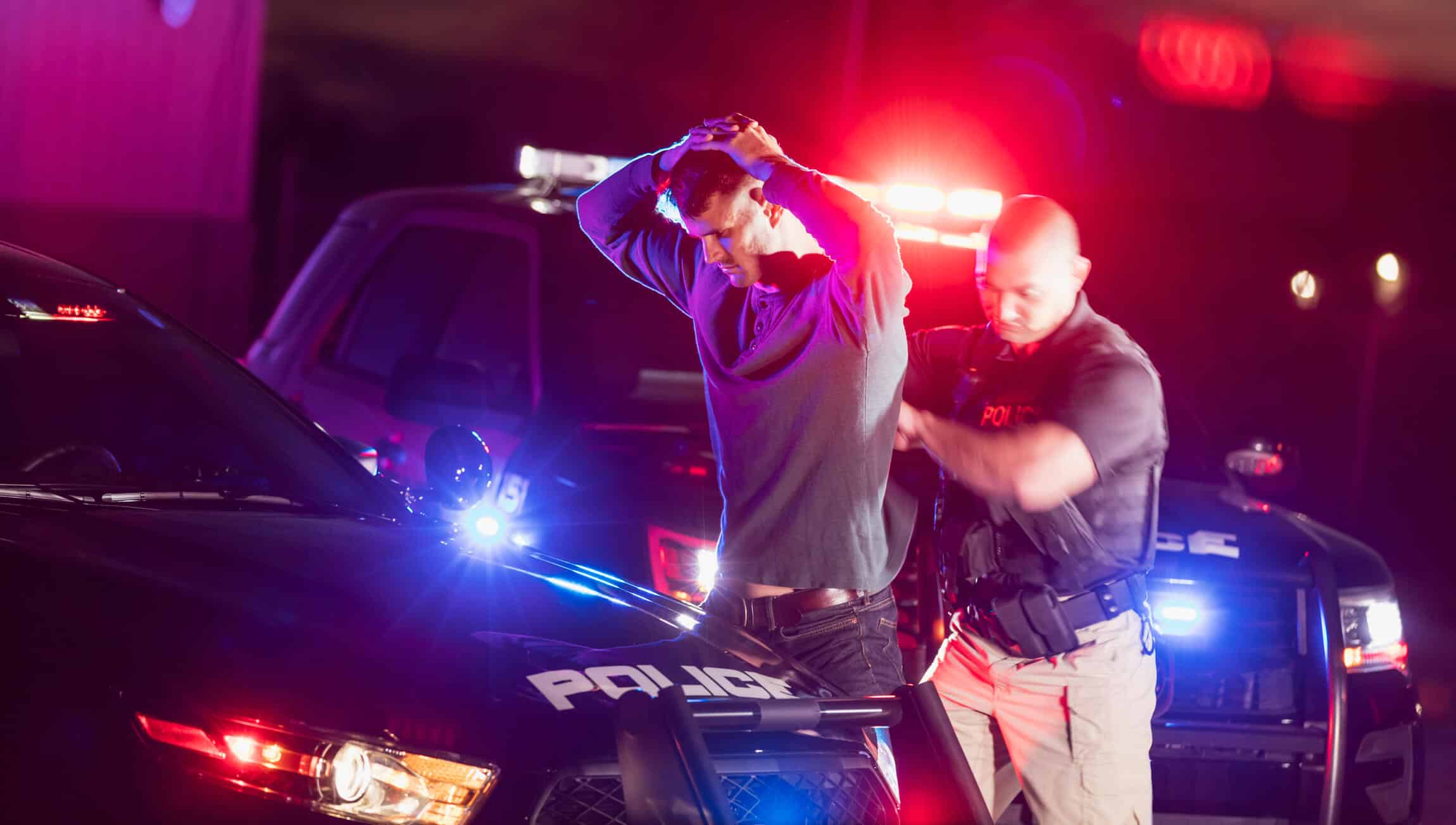
What Is Police Misconduct?
Police misconduct includes such actions as use of excessive force (police brutality), denial of basic constitutional rights, racial profiling, tasering, and illegal search and seizure.
Lately, it is the use of excessive force which has been the focus of much of the media’s attention. And for good reason. One study noted “Recent estimates suggest that over 70,000 people are injured during police encounters annually.” (1)
And, according to the Bureau of Justice Statistics regarding nonfatal force, 49.2 million U.S. residents age 16 or older had contact with police in 2022. Among them, an estimated 1.5% experienced the threat or use of nonfatal force by police. This included using slurs or degrading names, handcuffing, threatening force, pushing or grabbing, hitting or kicking, using pepper spray, using an electroshock weapon, pointing or firing a gun, or using other force during the most recent contact. (2)
Likewise, New York City Police Department (NYPD) Use of Force Report notes, there were 9,777 total reportable police force incidents in 2023. Of these, “95.2% were classified as Level 1, 3.0% as Level 2, 1.5% as Level 3, and 0.3% as Level 4” uses of force. (3)
During 2023, the NYPD reported 12,860 individuals were subjected to some level of force by police. As a result of the use of force, there were 146 subjects who were substantially injured and 220 who were seriously injured. (4)
NYPD raw data tables of subject injuries for the third quarter of 2025 totaled 1,789. Of these injuries, 77 were serious, 45 were substantial, and 1,667 were simply noted as being physical. (5)
Additionally, 2025 incidence raw data reveals use of force incidents totaling 3,323 with 55 of those occurring while involved officers were off duty. There were 14 incidents that involved fire arms, 460 involved electrical weapons, 22 impact weapons, 24 OC spray, and 2,802 physical force. (6)
From these numbers, it is clear that you are not alone if you or a loved one was injured by the police. You may need to sue to get the justice you deserve. This includes suing for wrongful death.
Incidents of Police Misconduct
The widely reported fatal arrest of George Floyd by four Minneapolis police officers is shocking. Floyd was killed when an officer kneeled on his neck for several minutes, even when Floyd pleaded with the officer that he could not breathe. (7)
Another incident is the fatal shooting of a 26-year-old emergency medical technician. Breonna Taylor was killed by Louisville police who entered her home to execute a search warrant without knocking or announcing themselves. (8)
These incidents are disturbing for several reasons. First, the use of excessive force, and secondly, the failure of police to treat suspects humanely.
These are just two of many police misconduct incidents which have come to light. Here are some other examples of police misconduct:
Tasered to Death
Darryl Williams, age 32 with heart problems, was tased four times during an arrest attempt by police in Raleigh, North Carolina. Police had found a powdery substance on a bill in Williams’ pants pocket and he tried to run away. Williams died of cardiac arrest “in the setting of cocaine intoxication, physical exertion, conducted energy weapon use, and physical restraint. The death was ruled a homicide,” according to reports by PBS News. (9)
Excessive Use of Force
A Florida TV news station report shows a Jacksonville police officer physically assaulting a man during a traffic stop. The driver was pulled over for “reportedly driving without his headlights on during the rain.” Bodycam shows the Black male driver sitting in his car as the white officer breaks the driver’s side window with an elbow, then yanks him from the vehicle. (10)
Racial Profiling
A Black South Carolina woman, Anaysheon Coffey, filed a lawsuit against the city of Lancaster Police Department after her wrongful arrest in 2020. The woman claimed she was racially profiled and wrongfully arrested at her home after an illegal search by a white officer.
The officer arrived at her home, seeking her child’s father. She refused to admit him without a warrant. The officer forced his way in and searched the premises. All charges against Ms. Coffey were later dropped.
“This resolution sends a powerful message that racial profiling and harassment won’t be tolerated,” said her attorney, Tyler Bailey. (11)
Constitutional Rights Denial
Police misconduct includes the denial of basic constitutional rights.
In the spring of 2024, the U.S. District Court for the Southern District of Mississippi decided in favor of Desmond Green. He was falsely accused, by a police detective, of capital murder based on the testimony of an unreliable witness.
Mr. Green spent two years in a county detention center under deplorable conditions. The Equal Justice Initiative reported the facility was, “full of violence, rodents and snakes, and moldy food.” He feared for his life while enduring continuous yelling, fighting, and threats. And he regularly “had to sleep on the bare floor.” (12)
The police detective was the defendant in the case, but claimed he had qualified immunity” for the accusations. Qualified immunity “means people wronged by government agents cannot sue those agents unless the Supreme Court previously found substantially the same acts to be unconstitutional.” The court ruled against the detective in the federal civil rights lawsuit because “her actions violated clearly-established law.” (13)
The Equal Justice Initiative goes on to say, “In addition to keeping victims from obtaining—or even seeking—damages for egregious misconduct”, the court indicated that “another obvious consequence of qualified immunity… is a perpetuation of racial inequality.” (14)
Federal Prosecution Against Police
The U.S. Department of Justice investigates and prosecutes law enforcement officers on violations of constitutional rights. “The Department’s investigations most often involve alleged uses of excessive force, but also include sexual misconduct, theft, false arrest, and deliberate indifference to serious medical needs or a substantial risk of harm to a person in custody.” The Department’s investigations also cover failure to intervene. (15)
However, there are two standards which must be met before the government can seek an indictment. First, the government has to be certain a federal crime has been committed by the officer. And second, the government must believe that the charges can be proven beyond a reasonable doubt and it can win the case. (16)
In roughly 99% of the cases, no charges are filed “when a police officer kills someone on the job.” (17)
If the federal government does not choose to investigate, you need to hire your own attorney to pursue your legal case against police misconduct. For federal claims, you have three years to file a Notice of Claim.
If you or anyone you know has suffered an injury because of police misconduct, contact us for a free case evaluation.
Get a Free Case ReviewWhat to Do If You Have Been a Victim of Police Misconduct
During any face-to-face encounter with police, you should:
- Stay calm.
- Comply with police requests as best as possible.
- Request restraint and say nothing more.
- If the situation permits, record the incident or take photos with a cell phone.
- Do not be aggressive in any way; aggression may be used against you when pursuing legal action.
As soon as the encounter ends, follow these steps: (18)
- If you have been injured, seek medical attention.
- Document the incident by writing down everything that happened.
- When quoting yourself or the police, use exact words.
- Note the specifics such as location, time, and day.
- Identify the officer(s) by badge number, name, and/or physical description.
- Get the names and contact information of witnesses.
- Consult with an attorney. Your attorney can help you identify what rights you have.
- File a Police Misconduct Complaint.
If you are suing the NYPD, you must file a Notice of Claims with the New York City Comptroller’s Office within 90 days of the occurrence.
Filing New York Police Misconduct Complaints
In New York, register your complaints of police misconduct simply by filling out a form. You can submit the form in person, by phone, by mail or e-mail, or online.
Be aware that the complaint form asks for your identity and contact information. There is no established process for making anonymous complaints.
However, the NYPD’s Internal Affairs Department does offer an unrecorded, anonymous tip line. (19)
Filing a Lawsuit in New York
In New York, you have 1 year and 90 days from the date of the incident to file your lawsuit.
There are several steps in the legal process which must be completed prior to your lawsuit going to trial:
A summons and complaint document must be served. This notifies the officers of the specific complaints against them and requires their presence at a hearing or in court.
The Discovery phase consists of evidence gathering through conducting interviews, the review of relevant facts, and any recorded media of the incident.
Motions (a procedural device) are made. Motions allow a limited or specific contested issue to be brought before the court for a decision.
Settlement negotiations ensue. This is where a specific dollar amount is agreed to as compensation. If no figure is reached, then the case goes to trial.
Trial is the legal proceeding in which arguments and evidence from the plaintiff (person suing) and the defense (person being sued) are presented in court before a judge.
Why File?
There are many reasons you should file a lawsuit against police who have injured you or killed someone you loved. Doing so: (20)
- Creates a permanent record.
- Effects change both in police department practices and officer behavior.
- Ensures an investigation is conducted.
- Delivers a fair and impartial hearing.
- Speaks directly to the officer involved.
- Gets you the compensation you deserve for your injuries.
Weitz & Luxenberg Legal Victories
Weitz & Luxenberg continues to win verdicts and negotiate settlements for our clients.
Here are just a few cases where our personal injury team made a difference:
- Our firm secured a $13.34 million judgment on behalf of a victim attacked at a New York City bar.
- W&L was instrumental in getting a $16.4 million award for our client in a wrongful death case.
Weitz & Luxenberg has successfully represented clients for nearly 40 years. We stand up to people and organizations who wield power, on behalf of anyone who may be vulnerable.
In a free initial consultation, we can evaluate your case and help you understand your legal options. We would be honored to represent you in your time of need against any police misconduct that injured you.
Updated January 2026