

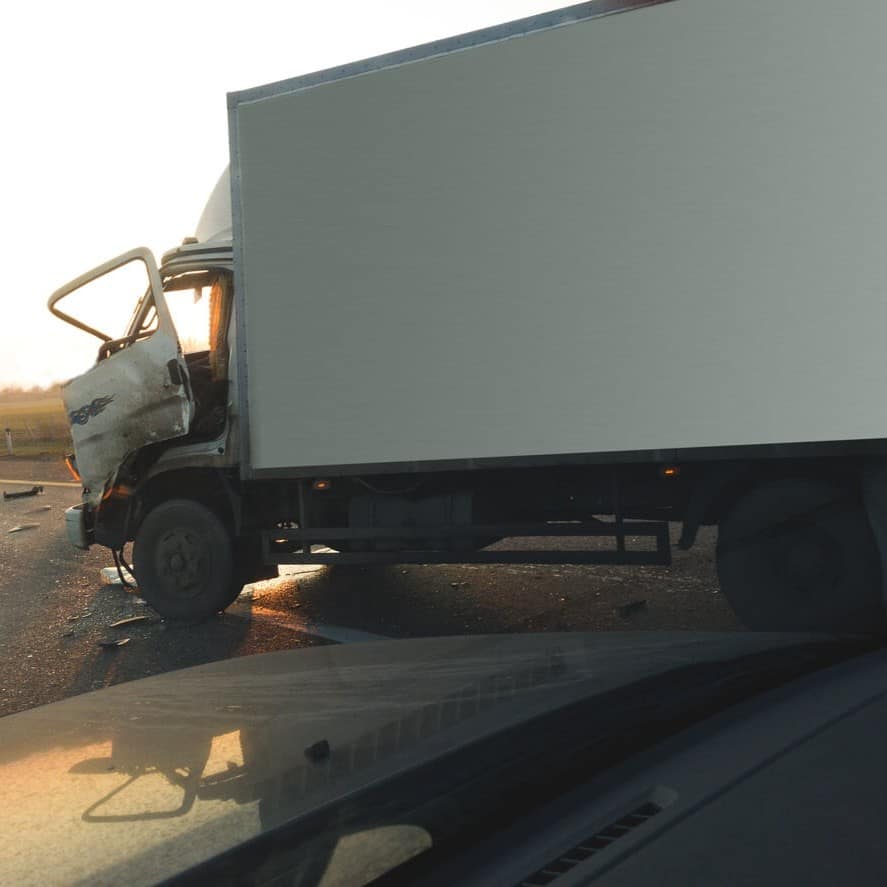
Large Truck Crash Statistics
“Of the approximately 503,000 police-reported crashes involving large trucks in 2022, there were 5,279 (1 percent) fatal crashes and 114,000 (23 percent) injury crashes,” according to the Federal Motor Carrier Safety Administration (FMCSA). (1)
FMCSA says, “In 2022, on average, there were 1.12 fatalities in fatal crashes involving large trucks.” It goes on to say, “The majority, 82 percent, of fatalities were not occupants of the large truck.” (2)
Small Trucks, and Cargo and Delivery Van Statistics
Accident statistics for small trucks, and cargo and delivery vans, such as FedEx Express and UPS, are even more jarring.
FMCSA reports crashes involving FedEx Express delivery trucks for the 24 months prior to July 31, 2026, totaled 3,100. Of those, 79 were fatal and 1,069 were injurious. (3) During that same timeframe, UPS delivery trucks were involved in 2,234 crashes, with 50 causing deaths and 795 causing injuries. (4)
“Cargo vans (small trucks) account for 35% of all truck crashes,” claims Worldmetrics, a research and data source. The source also claims, “60% of all truck crashes involve small/medium trucks (e.g., delivery vans), compared to 5% involving buses.” (5)
Obviously, a large city like New York City (NYC) relies heavily on delivery trucks to move goods into, out of, and throughout the city. In fact, “Trucks carry more than 89% of the goods and services we consume, a percentage that far surpasses most American cities,” says a NYC report on truck management. (6)
NYC Truck Accidents
The dangers trucks pose to pedestrians, particularly in cities like NYC, are well documented by research studies. (7) In 2026, NYC truck accidents injured 316 pedestrians citywide as of June 11, according to traffic crash statistics website, CrashCount.nyc. (8)
In its 2021 New York City (NYC) truck management plan, the city’s Department of Transportation (DOT) notes: (9)
- Crashes totaled 55,134 from 2013-2016. Of these, in 2,407 crashes people were killed or severely injured (KSI).
- “The most truck-involved pedestrian and cyclist KSI occurred in Manhattan (42%), followed by Brooklyn (29%) and Queens (18%).”
- Of these pedestrian and cyclist KSI crashes, 67% occurred on designated truck routes.
- Almost 80% of KSI crashes occurred between 7 a.m. and 7 p.m.
- The top five truck types in KSI crashes are tractor trailers, delivery trucks, dump trucks, utility trucks, and tow trucks.
If you or anyone you know has been involved in a delivery truck accident, contact us for a free case evaluation.
Get a Free Case ReviewCauses of Delivery Truck Accidents
In an effort to avoid more delivery truck accidents, the causes of such accidents have been scrutinized by both governments and the insurance industry.
“Commercial and delivery trucks present unique dangers to smaller vehicles on the road,” says Charlotte Stories Newsletter, an online publication. (10)
“Minor errors such as not signaling before passing can increase the risk for accidents, especially on highways where eighteen-wheeler trucks might be present at high speeds,” adds the Newsletter. (11)
The Insurance Institute for Highway Safety (IIHS) notes, “Truck braking capability can be a factor in truck crashes.” (12) IIHS explains, “Loaded tractor-trailers require 20% to 40% more distance than cars to stop, and the discrepancy is greater on wet and slippery roads or with poorly maintained brakes.” (13)
“Driver error is the primary cause in 92% of truck crashes,” (14) says one research and data website. However, there are other causes. Often accidents are the result of a combination of causes.
Other accident causes include:
- Distracted driving. Drivers who spend long hours behind the wheel can become bored. This is especially true in rural areas where stopping points are fewer and further between. Eating, texting, using GPS, or handling paperwork can take attention away from the road ahead, with deadly consequences. (15)
- Driver fatigue from long shifts. In 2024, 30% of deaths in large truck crashes occurred on interstates and freeways. Many truck drivers get tired because they exceed the 11-hour driving limit without stopping to rest. IIHS research indicates many drivers disregard this regulation for several reasons, including to meet scheduling deadlines. (16)
- Improper cargo loading. A truck’s load can affect the vehicle’s performance, even causing it to topple over. Also, the load it is carrying can affect maneuverability, straining tires and suspension. “Cargo not secured properly can shift during transit, causing instability.” (17)
- Poor training. Commercial vehicle drivers receiving outdated or limited training are prone to make errors. Training should include vehicle operations, safety regulations, emergency responses, and defensive driving techniques. Drivers should receive ongoing training. (18)
- Speeding. Many delivery companies hold their drivers to strict schedules with very tight delivery times. Drivers who fear losing their jobs because of unmet delivery deadlines may choose to increase their speed beyond what is safe for their truck and the road conditions. (19)
Drivers of delivery trucks and the companies they work for are responsible for maintaining trucks and equipment, following safety procedures, obeying traffic laws, complying with federal regulations, and meeting training requirements. Failure to do so makes them liable for injuries resulting from accidents.
Common Injuries from Delivery Truck Accidents
Among the common injuries sustained in delivery truck accidents are:
- Head injuries — There is “a vast array of injuries that occur to the scalp, skull, brain, and underlying tissue and blood vessels in the head.” (20) Traumatic brain injuries (TBI) are the result of a sudden physical impact causing damage. “The severity of a brain injury can range from a mild concussion to a severe injury that results in coma or even death,” Johns Hopkins Medicine explains. (21)
- Spinal injuries — Vehicle crashes cause 37.1% of spinal cord injuries according to the National Spinal Cord Injury Statistical Center (NSCISC). The Center says, “the annual incidence of traumatic spinal cord injury (tSCI) is approximately 54 cases per one million people in the United States, which equals about 18,482 new tSCI cases each year.” (22)
- Broken bones, fractures — Types of fractures include breaks that go in a straight line or breaks that are uneven. Other fractures can leave a gap where they occur. The bone can also be cracked (stress fracture), or squeezed out of place (buckle fracture). Additionally, bones may be shattered, crushed, or broken in several places. (23) Perhaps the most serious is an open compound fracture, where the bone breaks through the skin. This allows bacteria to enter and cause infection. “An open fracture is a surgical emergency,” according to the American Academy of Orthopaedic Surgeons. (24)
- Burn injuries — Large trucks were involved in an estimated 15,462 highway vehicle fires annually from 2018-2022, according to the National Fire Protection Association (NFPA). These fires caused 46 deaths and 102 injuries among civilians. (25)
- Death — “Large truck drivers were involved in 1.6 fatal crashes per 100 million miles traveled in 2024,” according IIHS. The organization goes on to say, “In 2024, 5,340 people died in crashes involving large trucks.” (26)
For a free case evaluation and more information about your legal options for your delivery truck accident, please contact us today.
Get a Free Case ReviewLegal Options
If you have been seriously injured in a delivery truck accident, you should consider all of your legal options.
Companies such as Amazon, FedEx, and UPS hire independent contractors to handle deliveries. This helps them avoid liability for accidents. Your case may be against the drivers and any contracting company they work for rather than Amazon, FedEx, or UPS.
In personal injury cases, legal responsibility for an accident (liability) entitles the “harmed party” to collect a monetary award (damages). (27)
There are two primary types of damages awarded: compensatory and punitive. Compensatory damages compensate the injured party for loss or injury, while punitive damages are intended “to punish the wrongdoer.” (28)
Demonstrating liability to the court is complicated. The services of an experienced attorney can prove invaluable.
How W&L Can Help
Weitz & Luxenberg has a long history of success in personal injury cases, as these examples illustrate:
- W&L won a major verdict in a hit-and-run case leaving our client paralyzed. He was awarded $20.5 million plus another $3 million for past and future medical expenses.
- W&L secured a $1.4 million settlement for our client who suffered catastrophic injuries after being struck by a city ambulance in Manhattan.
- W&L won a $2.96 million verdict for our client who lost part of his leg in a workplace incident due to the negligence of a coworker driving a hi-lo. Also relevant is the company had a workspace designed without adequate barriers for vehicles.
Updated August 2026