 W&L Team
 Nonarteritic anterior ischemic optic neuropathy (NAION) is a condition involving sudden damage to the optic nerve when it does not receive enough blood flow. It can cause sudden, typically painless vision loss, that can significantly affect a person’s daily life and independence.
To diagnose NAION, doctors need to evaluate your symptoms and consider your medical history. They also need to examine your optic nerve and review results from eye tests.
If you were diagnosed with NAION, you may have questions about whether certain medications led to your vision loss. Ozempic, Wegovy, or other semaglutide drugs may have played a role.
This guide explains how NAION is diagnosed, what tests eye doctors may use, and what they look for when evaluating sudden vision loss. You can also learn what steps you can take after a NAION diagnosis, including what to consider if you were taking Ozempic, Wegovy, or another semaglutide medication when your vision problems developed.
If you developed NAION after taking Ozempic or Wegovy, you may have questions about your legal options. Weitz & Luxenberg can review your circumstances and help you understand your next steps.
Request a Free Case EvaluationHow Do Eye Doctors Diagnose NAION?
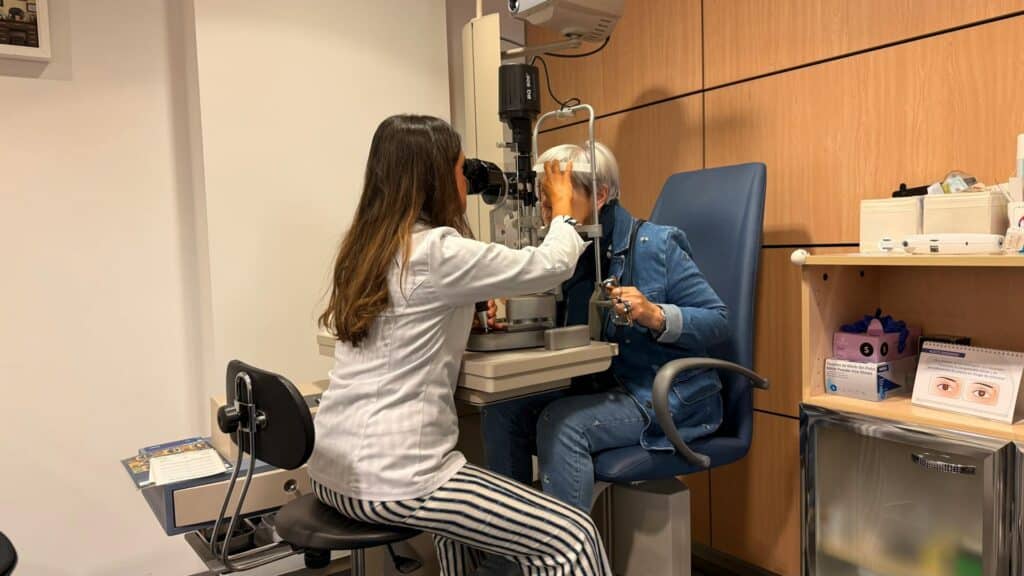
If you experience sudden vision loss, you should contact your doctor right away. You may be referred to a neuro-ophthalmologist, a doctor who specializes in conditions affecting the eyes and nervous system, may evaluate someone suspected of having NAION. These doctors know about problems affecting the optic nerve. Doctors begin by conducting a comprehensive eye exam. They may start by asking you these kinds of questions: (1)
- How and when did your vision loss begin?
- Was your vision loss sudden and painless?
- What imaging or diagnostic tests have you already undergone, if any?
- Have you seen other doctors about your current vision loss? What do they think?
- Do you have other medical conditions? If so, what conditions do you have?
- What current and recent medications do you take?
Your doctors may also conduct some basic vision tests. These include having you read from an eye chart and look at images to see if you show signs of color blindness. (2)
Doctors need to get a sense of your overall health. They may check your blood pressure and order blood tests to check for high cholesterol and diabetes. They also look for other possible eye problems. Sometimes, too, you may be experiencing side effects from medications you are taking or complications due to a medical condition you have. General questions help doctors narrow down a possible diagnosis of NAION. (3)
What Tests Are Used to Diagnose NAION?
Doctors may use several tests for NAION to evaluate the optic nerve, measure vision changes, and rule out other possible causes of vision loss. The tests a doctor conducts vary depending on your symptoms and medical history. Not every person necessarily undergoes every test. In addition to a comprehensive eye exam, other tests a doctor can use to diagnose NAION include:
- Visual acuity: This test could be as simple as reading letters off an eye chart. Your doctor is looking for how sharp your central vision is. (4)
- Visual field testing: Your doctor may use charts or even just fingers to see how good your peripheral vision is. Basically, your doctor is checking to see how well you see out of the sides of your eyes. (5)
- Pupillary exam: Doctors take a light and shine it in your eyes. They look to see how well your pupil reacts to a bright light. Your pupil should get much smaller when they shine the light and become larger when the light is removed. (6)
- Optical coherence tomography (OCT) and OCT angiography: These imaging tests are noninvasive. The tests use light waves to take pictures of your retina in cross sections. Your doctor can see your retina’s different layers, as well as fibers of your optic nerve. Your doctor uses eye drops to dilate your pupil. An imaging machine scans your eye, but does not touch your eye. The scan takes about 5 to 10 minutes. You are sensitive to light for several hours, until the eye drop solution wears off. Then your pupils return to normal. Your doctor looks for signs of diabetes, age-related macular degeneration, and other conditions. (7)
- Fluorescein angiography: Your doctors take pictures of your retina. They use a special camera. Your doctor can look at the blood vessels and other tissues in the back of your eye. Doctors use eye drops to dilate your pupil. They inject a colored dye called fluorescein into a vein in your arm. The dye travels throughout your body for 10 to 15 seconds and reaches the vessels in your eye. These blood vessels now shine brightly. In the meantime, a special camera is taking pictures. Your doctor can look for signs of swelling, abnormal or damaged blood vessels, macular degeneration, blockages in your veins, or other unusual qualities. (8)
- Funduscopic eye exam: This is noninvasive and painless. Doctors examine your fundus, your eye’s inner back wall. They can take a closer look at how your pupils react and how light reflects off the back of your eye. They can also examine the structure of your optic nerve and the overall health of your retinas. Your doctor uses special magnifying tools with lights to see inside your eye. They choose the type of fundoscopy: direct or indirect. A direct exam uses a handheld magnifying device with a light attached. Your doctors sit directly in front of you holding the device and look into your eye. An indirect exam involves using a ring-shaped frame worn on their head. They choose to look through the viewing bar that sits at the front with one or both of their eyes. Your doctors also use a handheld condensing lens angled to see the back of your eye. They can even see it in 3D if they look through the viewing lens with both eyes. (9)
How Do Doctors Rule Out Other Causes of Vision Loss?
Because there is no single test that confirms every case of NAION, doctors may also look for signs of other conditions that can cause sudden or significant vision loss. Ruling out these conditions can be an important part of reaching a NAION diagnosis.
The tests your doctors conduct can help them do this. These conditions can also lead to vision loss:
- Arteritic anterior ischemic optic neuropathy (AAION): This type is most frequently the cause of severe, sudden damage to the optic nerve in elderly patients caused by temporal arteritis (inflammation of blood vessels). Usually, the condition affects just one eye. Since this condition is due to inflammation, corticosteroids are often prescribed. (10)
- Optic neuritis: This is caused by swelling. Your optic nerve is damaged and you experience temporary vision loss. You may experience pain when you move your eye. Sometimes doctors use steroid medications to improve your recovery time. (11)
- Retinal artery or vein occlusion: This occurs when something blocks the blood flow in a small blood vessel that is moving blood away from your retina. You may experience blurred vision or vision loss. No treatment exists to reverse or undo the blockage. However, doctors may prescribe medication to treat the symptoms. (12)
- Retinal detachment: This is a medical emergency. The tissue at the back of your eye has become detached from its regular position. You may experience reduced vision, loss of your peripheral vision, and dark floating shapes or flashes of light in your field of vision. The condition is typically painless. Seeing an ophthalmologist ASAP may help save your vision. (13)
- Glaucoma: This most often affects older adults. Increased eye pressure may be damaging nerves in your eye. You may not notice any symptoms early on. Vision loss tends to be gradual. Damage done by glaucoma can’t be undone. However, treatment may help slow the disease and vision loss. (14)
- Infections: Medications can treat some infections in your eye. (15)
- Multiple sclerosis and other immune disorders: These can lead to inflammation. The conditions themselves can sometimes be treated. (16)
- Trauma: Trauma leading to vision loss can sometimes be treated. (17)
- Build-up of pockets of calcium salts and protein: The sooner you see your doctor for treatment, the better. (18)
- Damage to the brain itself: Neurological damage to the brain can also lead to vision loss. Examples include stroke, brain tumor, head injury, and meningitis. For these conditions, you need to see a doctor specializing in neurological disorders. (19)
If you have questions about whether a medication you’re taking could have contributed to your injury, you also need to understand your potential legal options.
Get a Free Case ReviewWhat If You Were Taking Ozempic When Or Recently Before You Were Diagnosed With NAION?
If you were taking Ozempic and were diagnosed with NAION or in fairly close time proximity, you may be able to seek compensation for your injuries. The attorneys at Weitz & Luxenberg have filed the most number of lawsuits on behalf of clients who took Ozempic and Wegovy. (20)
To build a strong case, we need to show a link between your use of Ozempic or Wegovy, and your diagnosis of NAION. It’s important to keep records of your medication history. We rely on this information when filing your lawsuits.
The timing between beginning or changing medication and developing vision symptoms is important information. In fact, all prescription, pharmacy, and medical records may prove useful in reconstructing your timeline.
It’s essential to discuss any medication concerns and potential changes you have with your medical provider. If you have questions about whether a medication you’re taking could have contributed to your injury, you also need to understand your potential legal options.
What Should You Do After a NAION Diagnosis?
If you have been diagnosed with NAION, consider these next steps:
- Follow up with your medical providers. You may even want a second opinion.
- Keep copies of your NAION medical records.
- Document when your vision problems started.
- Keep your medication and prescription history.
Consider speaking with an attorney about your legal options if you developed NAION after taking Ozempic or Wegovy.
How Weitz & Luxenberg Helps Clients with NAION
If you were diagnosed with NAION after taking Ozempic or Wegovy, we encourage you to contact Weitz & Luxenberg. We offer a free initial consultation and can help you consider your circumstances and the next legal steps you could take.
Weitz & Luxenberg is in leadership in the New Jersey Multicounty litigation where plaintiffs from around the country have filed suit against the New Jersey based Novo Nordisk. Ellen Relkin is appointed by the court as Co-Lead Counsel and Danielle Gold is the court appointed Liaison counsel. (21)
For nearly four decades, Weitz & Luxenberg has represented individuals and families in complex litigation involving dangerous drugs and defective products. Our attorneys draw on that experience when investigating potential claims and helping clients understand their legal options.
Frequently Asked Questions (FAQs)
Here are answers to commonly asked questions about using Ozempic or Wegovy and developing NAION:
Can I File a Lawsuit If I Was Diagnosed with NAION After Taking Ozempic?
You may have grounds to pursue a claim if you developed NAION after taking Ozempic. Whether you have a potential case depends on the circumstances, including your diagnosis, medication history, timing of your symptoms, and other relevant medical information.
Do I Need a Confirmed NAION Diagnosis for an Ozempic Vision Loss Claim?
Yes, you would need a confirmed NAION diagnosis for a successful Ozempic or Wegovy vision loss claim. However, some clinicians need to refer you to the specialty of neuro-ophthalmology to make the diagnosis. While many ophthalmologists can render the diagnosis, it is preferable to also see the most specialized professional, a neuro-ophthalmologist. However, there are only approximately 650 neuro-ophthalmologists currently in practice in the United States, meaning one for every half a million people. (22) Therefore, you may have to wait a long time before you see the neuro-ophthalmologist, but you should certainly see the traditional ophthalmologist right away. In some rural locations, you may need to travel many hours to be seen by this specialist.
What Records May Be Important If I Developed NAION While Taking Ozempic?
The more records you have regarding your use of Ozempic and your diagnosis of NAION, the better. Hold onto documents about doctors you have seen, tests you have completed, and potential diagnoses your doctor has ruled out. This information shows a link between your use of Ozempic and NAION. This information also helps your attorney determine the compensation you deserve.
Can I Still Have A Potential Claim If I Have Other Risk Factors For NAION?
Yes, you might still have a potential claim if you have other risk factors for NAION. Indeed, it is well recognized that NAION is multifactorial and semaglutide use shows association with increased NAION risk “particularly in patients with predisposing” risk factors. (23)
These “risk factors for NAION include a ‘disc at risk’ (crowded optic disc with a small cup-to-disc ratio), hypertension, diabetes mellitus, hyperlipidemia, nocturnal hypotension, sleep apnea, and certain medications that affect vascular perfusion.” (24)
Indeed, the disc at risk is something that can be easily determined by a simple eye examine by an optometrist. Unfortunately, Novo Nordisk does not warn United States patients of this risk, or this simple precaution, so that those at optic nerve risk know to avoid this medication. In Australia however, Novo Nordisk states SPECIAL WARNINGS AND PRECAUTIONS FOR USE: that “It is known that individuals with an anatomical predisposition (‘disc at risk’), whether or not they are taking a GLP-1 agonist, are at highest risk of developing non-arteritic anterior ischaemic optic neuropathy (NAION). This pre-existing risk can be assessed by an optometrist or ophthalmologist. Some epidemiological studies indicate an increased risk of NAION during treatment with semaglutide. There is no identified time interval for when NAION may develop following treatment start. Patients reporting a sudden loss of vision (including partial loss) should be urgently referred for ophthalmological examination and treatment with semaglutide should be discontinued if NAION is confirmed.” (25)